

Reading Contours to Plan a Gentler Ascent
What the Lines Are Telling You
Contour lines are the quietest feature on a map, and the most useful. They do not show you a path, a view or a bothy. They show you the shape of the ground: every line joins points of equal height, and on most UK hill maps the interval is 10 metres. Read them well and you can feel a slope before you meet it. You can tell whether a route will ease you upwards at a pace you can hold and enjoy, or whether it will put you on your hands in wet heather with your breath gone. For anyone who walks the fells and writes about them, contours are also a form of attention. They slow you down before you have even left the house.
The Spacing Rule and What It Feels Like
The first skill is simple: the closer the lines, the steeper the ground. On a 1:25,000 map, 10 metres of ascent is a fixed vertical step. The horizontal distance between lines tells you the gradient. If two contours sit about 2 millimetres apart, that is roughly 50 metres of ground on the map, which gives a slope of about 1 in 5, or 20 per cent. That is steep. You will feel it in your calves and your lungs. If they are 4 millimetres apart, that is about 100 metres of ground for the same 10 metres of rise, roughly 1 in 10. That is a steady pull, the sort you can settle into and keep talking on. If they are 5 millimetres apart or more, the angle eases to something like 1 in 12 or gentler, and the walking becomes a rhythm rather than a wrestle.
- Tight contours: steep, often eroded, slower than you think.
- Widely spaced contours: gentle, good for tired legs and conversation.
- Missing contours: either flat ground or a cliff edge. Check the symbols.
It helps to test this against ground you know. The next time you climb a familiar pike, look at the map afterwards and match the spacing to the effort. That memory becomes a calibration you can carry to new hills.
Shape, Aspect and the Feel of a Slope
Spacing gives you steepness. Shape gives you character. A convex slope steepens as you climb, so the top is harder than it looked. A concave slope is steep at the bottom and eases above, which can be a gift when you are starting cold. A straight slope is honest, but unrelenting. Look too at the direction the contours point. Where a line bends downhill into a valley, you have a spur or ridge. Where it bends uphill into the hillside, you have a gill, a re-entrant or a cwm. Spurs often give a drier, firmer line than the wet flanks beside them. Cwms and gills can funnel uphill beautifully, but they can also be boggy, boulder-strewn and steep at the head.
Aspect matters as much as angle. A north-facing slope holds snow, retains moisture and grows deep heather and moss. A south-facing slope dries quicker, carries shorter grass and often has a path beaten into it. In winter, the same contour spacing can mean very different things underfoot. Wind is another layer: a broad ridge may be gentler, but it is also more exposed. A sheltered gill may be steeper but kinder in a gale.
Choosing a Gentler Line on the Day
Planning a gentler ascent is not about avoiding height. It is about choosing the line that matches your pace, experience and energy on the day. A direct fall-line route is rarely the easiest. Instead, look for a diagonal traverse across the slope, using a spur or shoulder to gain height gradually. Footpaths that contour around a hillside are often old packhorse or miner's routes, and they were built for steady progress, not for sport. On the map, look for the thin dashes of a path that zig-zags or curves around a nose of land. That is usually a sign of a line that generations of walkers have found workable.
Use Naismith's rule as a rough check: allow about one hour for every 600 metres of ascent, plus one hour for every 5 kilometres of flat walking. If your chosen line is 1 in 5, add more time. If it is 1 in 12, the estimate will feel more honest. And always note escape points: a path, a wall, a forest edge, a broad ridge that lets you turn back without committing to a steep descent. A gentle ascent is one you can abandon gracefully.
Noticing as You Go: Upland Nature Writing
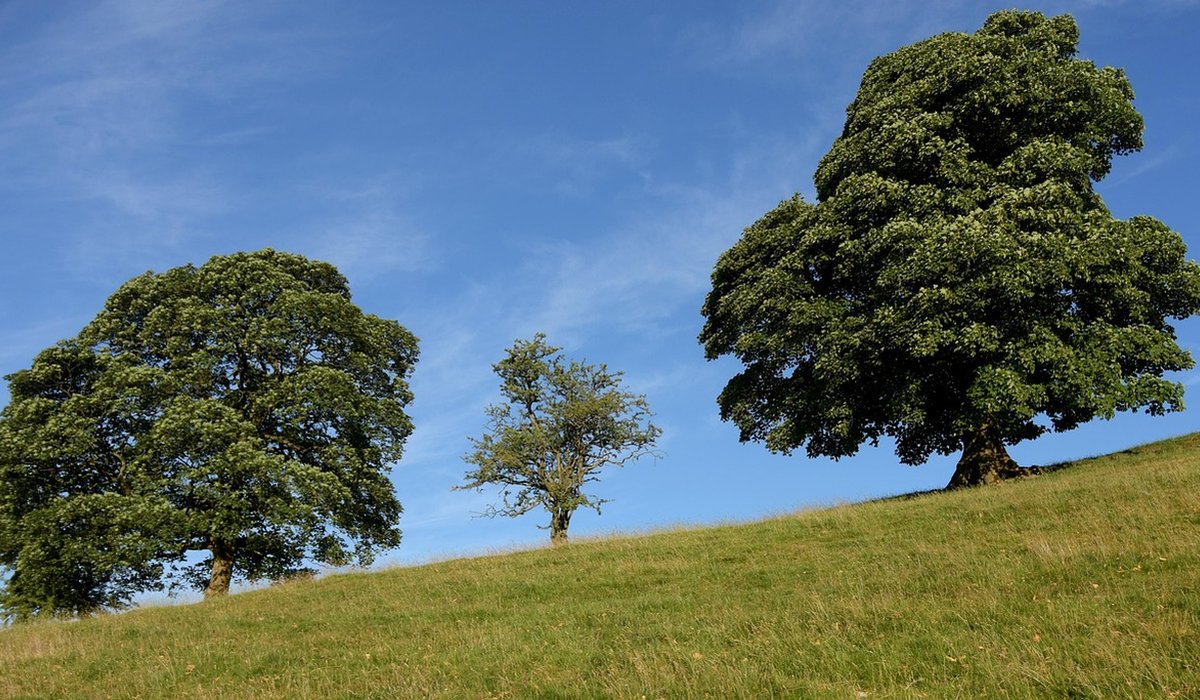
The line you choose changes what you see. A steep, direct route narrows your world to breath and foot placement. A gentler contouring path opens it out. You pass flushes of bright green moss and spring sedge, where meadow pipits flit up from the tussocks. You cross patches of bilberry and cowberry, tormentil and harebells. On a south-facing bank in early summer, you might hear the scratchy song of a skylark or the sharp tick of a wheatear. Higher up, where the contours tighten around a crag, ring ouzels and ravens use the updraughts. The contour lines on the map have led you past all of this, simply by keeping you on a saner angle.
Upland writing is at its best when it pays attention to that detail: the way cloud shadows move across a spur, the sound of a gill after rain, the colour of peat hags and the bright green of an erosion scar. Contours are not an abstraction. They are the shape of the ground that holds the heather, the birds, the water and the path.
A Simple Pre-Walk Routine
Before you set off, give yourself ten minutes with the map. It will change the day.
- Mark the 10-metre interval in your head and find the tightest groups of lines on your route.
- Identify any slope above about 1 in 5 and ask whether you want to be on it today.
- Choose a spur, shoulder or contouring path for the bulk of your ascent.
- Check aspect and wind and adjust for snow, wet ground or exposure.
- Pick two or three escape points where you can turn back without a steep descent.
- Set a pace and a turnaround time that leave energy for the walk out, not just the climb.
A gentler ascent is not a lesser one. It is a line chosen with care, and it often leads you closer to the fell itself. Read the contours, trust the shape of the land, and let the hill set the rhythm.


Fell Walks
-
Layers, waterproofs and spare gloves make a real difference when sunshine turns to hail on an exposed path far from shelter.

Hillcraft




-

Long established fact that a reader will be distracted
-

Long established fact that a reader will be distracted
-

Long established fact that a reader will be distracted


Navigation
Karla Gleichauf
12 May 2017 at 05:28 pm
On the other hand, we denounce with righteous indignation and dislike men who are so beguiled and demoralized by the charms of pleasure of the moment
M Shyamalan
12 May 2017 at 05:28 pm
On the other hand, we denounce with righteous indignation and dislike men who are so beguiled and demoralized by the charms of pleasure of the moment
Liz Montano
12 May 2017 at 05:28 pm
On the other hand, we denounce with righteous indignation and dislike men who are so beguiled and demoralized by the charms of pleasure of the moment