

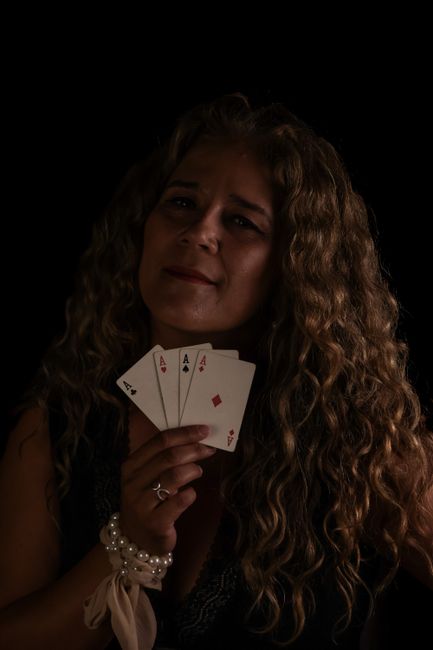
The Real Talk on RNGs, Poker Tells, and Not Going Broke
You’ve heard the pitches. "Guaranteed system!", "Unbeatable slots strategy!", "This one weird trick to beat the bookies." It’s noise. The iGaming world is a multi-billion dollar ecosystem built on math, psychology, and entertainment, not magic. If you want to actually enjoy your time at the tables or the slots without lighting your rent money on fire, you need to understand the machinery behind the curtain. Let’s cut through the marketing fluff and talk about how this stuff actually works.
Slots: It’s Not a Skill, It’s a Math Problem
Let’s start with the elephant in the room: slot machines. They are the cash cows of the casino floor, often generating 70-80% of a casino’s revenue. Why? Because they require zero skill. You can’t "aim" a spin. You can’t "feel" when a jackpot is coming. Every spin is an independent event governed by a Random Number Generator (RNG).
Here’s the concrete part that matters: RTP (Return to Player) and Volatility.
- RTP: This is the theoretical percentage of all wagered money that a slot will pay back to players over millions of spins. A 96% RTP slot keeps 4% for the house. That sounds low, but over thousands of spins, that 4% edge is ruthless. A 92% RTP slot is a wallet killer long-term.
- Volatility: This is how the slot pays. Low volatility means small, frequent wins that keep you playing but rarely double your balance. High volatility means long dry spells punctuated by massive, rare wins. A high-volatility slot with a 96% RTP can eat a $200 bankroll in 15 minutes if you’re betting $2 a spin. Match your bankroll to the volatility: low volatility for a slow grind, high volatility only if you’re prepared to lose it all for a shot at a 5,000x multiplier.
Don’t chase "hot" machines. A machine that hasn’t paid out in an hour is not "due." That’s the Gambler’s Fallacy. The RNG doesn’t remember the last spin. It’s a computer chip, not a sentient being with a grudge against your wallet.
Poker: The Only Game Where You Play the Player
Poker is the exception. It’s a game of incomplete information and psychology. You aren’t playing against the house’s mathematical edge; you’re playing against other humans (or increasingly, solvers and bots). And humans leak information.
Forget the Hollywood tells—shaking hands, looking at chips, or whistling. Those are amateur hour. Real tells are about timing and bet sizing.
- Timing tells: A snap-call on a wet board (flush and straight draws possible) often means a drawing hand. A long tank before a check usually means a weak hand trying to look strong, or a monster trying to act weak. But be careful—good players reverse this.
- Bet sizing: A player who bets tiny on a scary board is often scared themselves. A player who overbets the pot on a dry board (like 2-7-2 rainbow) usually has a set or two pair and wants to end the hand. They aren’t bluffing; they’re protecting.
The best tip for live poker? Play tight-aggressive in low-stakes games. Most players at $1/$2 or $2/$5 call too much. Don’t bluff them. Value bet them to death. If you have top pair, bet three streets. They will pay you off with middle pair. The money in low-stakes poker comes from patience, not hero calls.
Sports Betting: The Vig is the Villain
You think you’re betting against the team? You’re not. You’re betting against the vigorish (the vig), also known as the juice or the cut. It’s the commission the sportsbook charges for taking your action. Further details are available through สล็อต.
Standard odds are -110 on both sides of a point spread. That means you have to bet $110 to win $100. The book makes $10 on every $220 wagered, regardless of who wins. That’s a 4.5% hold for the house on a coin-flip bet.
To beat that, you need to win 52.4% of your bets just to break even. Most casual bettors hit around 48-50%. That’s why the sportsbook always wins.
So, how do you actually have a shot?
- Line shopping: Don’t just use one app. Use three. If one book has the Chiefs at -2.5 and another has them at -3, take the -2.5. Over a season, half a point changes your win rate by 2-3%.
- Fade the public: When 80% of the money is on the Cowboys, the line moves. If it doesn’t move, the sharps are on the other side. The book isn’t adjusting because they want you to bet the Cowboys. Don’t be the public.
- Bankroll management: Never bet more than 1-2% of your total bankroll on a single game. If you have a $1,000 bankroll, your unit size is $10-$20. This keeps you alive during a 1-5 losing streak, which happens to everyone.
The House Edge is Not a Myth (But Bonuses Are Tricky)
Every game has a house edge. Blackjack with perfect basic strategy is about 0.5%. Baccarat banker bet is 1.06%. Roulette (American) is 5.26%. Craps (pass line with odds) can be under 1%.
But here’s the trap: welcome bonuses. That 100% match up to $500 sounds great. But read the terms. Most have a playthrough requirement of 30x or 40x the bonus amount. If you deposit $100 and get a $100 bonus, you often have to wager $3,000 (30 x $100) before you can withdraw a dime. And if the slot you’re playing has a 4% house edge, the casino expects to keep $120 of your $3,000 wagering. You’re likely to bust before clearing the bonus.
Only take bonuses if the playthrough is low (under 20x) and the game contribution is 100% (some slots only count 20% towards playthrough). Otherwise, the "free money" is a leash, not a gift.
The Final Spin: Treat It Like Entertainment, Not Income
The harsh truth is that for 99% of people, iGaming is a cost, not a career. The math is designed to bleed you slowly. That doesn’t mean you can’t have fun. It means you need to set a budget before you log in or sit down, and treat that money as the price of a movie ticket or a nice dinner.
If you’re playing slots, play for the thrill of the spin, not the fantasy of the jackpot. If you’re playing poker, play to outthink your opponents, not to pay your electric bill. If you’re betting sports, do it for the sweat of the game, not as a second income.
The moment you start chasing losses or believing you’ve cracked the code, you’ve already lost. The smartest players in the room aren’t the ones with the biggest wins; they’re the ones who walk away when the fun stops. So set a limit, stick to it, and remember: the house always has the edge. Your job is to make sure it doesn’t have your rent money.


Fell Walks
-
A dependable compass with clear markings and a robust baseplate matters when mist, rain and cold hands make navigation difficult on the hills.


Hillcraft




-

Long established fact that a reader will be distracted
-

Long established fact that a reader will be distracted
-

Long established fact that a reader will be distracted


Navigation
Karla Gleichauf
12 May 2017 at 05:28 pm
On the other hand, we denounce with righteous indignation and dislike men who are so beguiled and demoralized by the charms of pleasure of the moment
M Shyamalan
12 May 2017 at 05:28 pm
On the other hand, we denounce with righteous indignation and dislike men who are so beguiled and demoralized by the charms of pleasure of the moment
Liz Montano
12 May 2017 at 05:28 pm
On the other hand, we denounce with righteous indignation and dislike men who are so beguiled and demoralized by the charms of pleasure of the moment